No results found, please try a different search term.
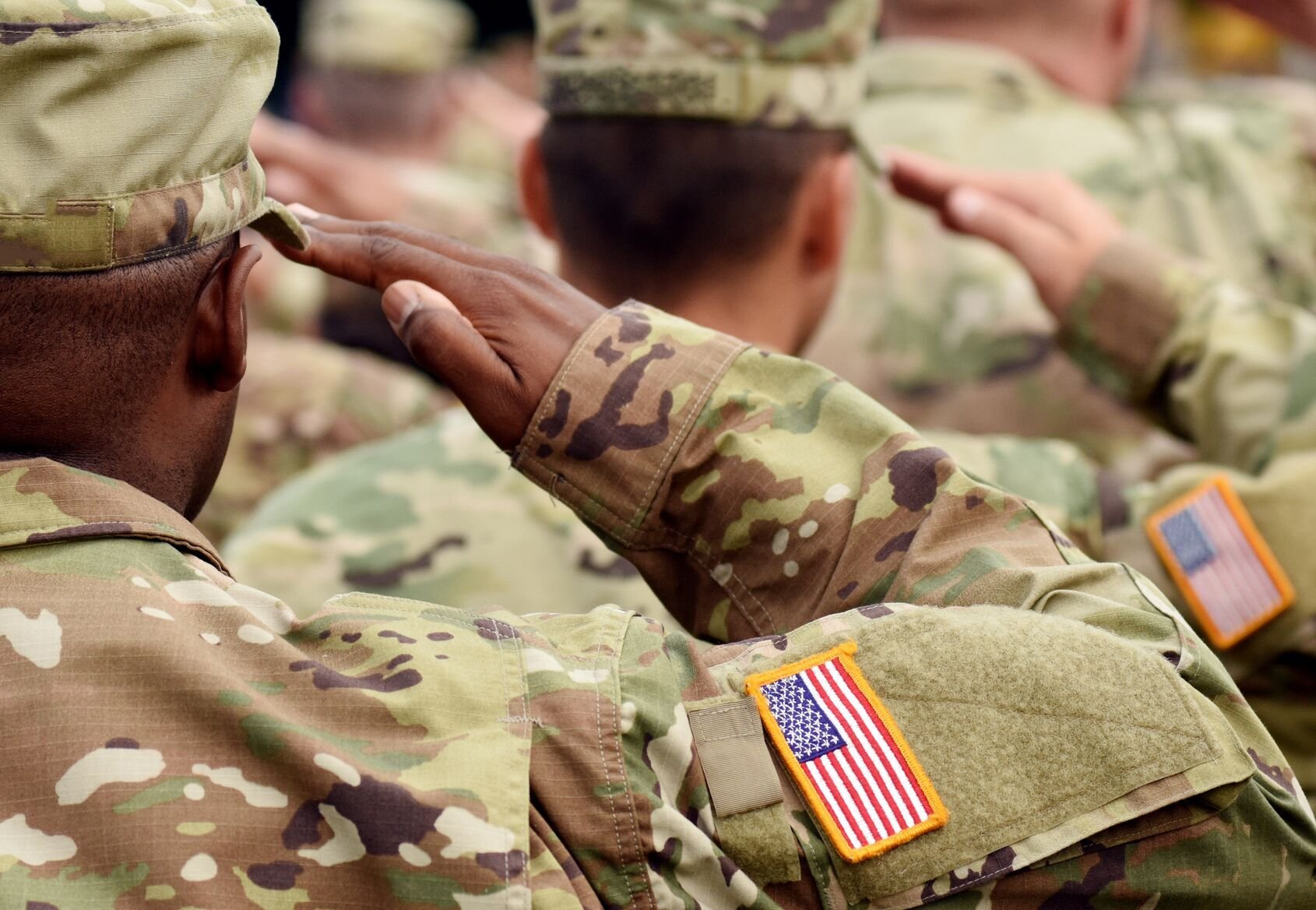
Ask HR Generalist Adam Albrecht what Valor, ISS’ employee resource group for veterans, offers that a formal benefits program cannot, and he doesn’t hesitate.
“In one word, it would be translation,” he said. “We typically think about it as a transition from military to civilian life, but you’re really learning how to translate an existing set of skills to something new.”
Albrecht is a 25-year Air Force veteran — a munitions systems specialist by trade — and the outgoing vice president of Valor, whose mission centers around connection, camaraderie and well-being for veterans and their families. He came to ISS through the Department of Defense SkillBridge program and joined the company as a full-time employee in April 2024.
An Inimitable Experience
“We have our own language in the military, even within the different branches,” Albrecht said. “You can tell when you’re talking to another veteran without them even saying it.”
Some of it is vocabulary — he still says “leave” when he means PTO, for example. But the shorthand showcases an experience that can’t be replicated.
“Military life is an experience I can describe all day, but nobody can really get it until they’ve done it,” he said.
That’s the value of a room full of people who don’t need an explanation. Valor’s meetings are structured, but the last stretch is kept deliberately loose for people to share their stories and find connection with colleagues who understand what they’ve been through.
What Transition Really Looks Like
When people picture leaving the military, a career pivot is usually top of mind. Albrecht’s experience was more granular.
“Honestly, one of the biggest aspects of my transition to civilian life was learning to dress myself like a human being,” he said. “Now that I’m not wearing the same thing Monday through Friday, it’s like, ‘What counts as business casual? Where do I get a suit?’”
But the larger adjustment is both structural and cultural. There are varying work styles to consider, and with fewer veterans in the room, it’s important to remember the differences between military and civilian work.
“You get institutionalized in the military 1,000%, and we’re all aware of it and glad to do it,” he said. “We also have to break out of some of those habits that don’t serve us. But the work ethic, the good things, we want to keep those going.”
What surprised him most, though, was how much of his skills carried over. “The strategies for HR are very similar to leadership in the military,” said Albrecht, who moved into HR after his Air Force tenure. What was new was the civilian scaffolding around the work — things like state laws, union and non-union environments and worker protections that differ than for those in uniform.
Common Concerns for Veterans
Albrecht argues the most common concern that comes up for veterans is how to make a disability claim with the Department of Veterans Affairs.
“You can do the claim on your own,” he says. “But using myself as an example, I have over 1,000 pages of medical records from my time in. It can be difficult to translate that and understand what it means medically, let alone how to make a claim based on that.”
The same knowledge gap runs across VA benefits generally, which includes education programs, support for spouses and children and other services people may qualify for but never hear about.
“The VA is amazing and they do a lot of advertising,” Albrecht says. “But as far as how to get some benefits, the process can be confusing.”
To mitigate some of the confusion, Valor does the digging and passes it along at meetings.
A Family Serves Too
During his military tenure, Albrecht deployed six times. His wife held the household together for all six, working full time and handling every domestic emergency on her own. For example, a water heater blew on day four of one of his deployments. During his final one, the HVAC system failed, taking out the heat amid a frigid February in Idaho.
“Families have to get dragged around every three to five years,” he said. “They’re also uprooting their lives, finding a new job or starting a new school. They serve right alongside us, but they also keep us going. They’re a support unit that goes everywhere with us.”
It’s part of why Valor’s leadership has never been veterans-only. Allies with family ties to the military are among the group’s strongest advocates.
What’s Next for Valor
For Valor, two priorities carry into next year. The first is growing and maintaining its partnership with the USO. As of 2026, the group’s annual September 11th memorial event has expanded to three sites, with more on the horizon.
“Donations to the USO go directly to the troops, to their kids, to their spouses,” Albrecht said, calling it the group’s most quantifiable impact.
The second is widening the SkillBridge pipeline, as every branch of the military possesses skills ISS and Guckenheimer need, from safety and logistics to running dining facilities.
“SkillBridge was huge for me,” Albrecht says. “Being able to show what I can do for four months, versus just using my resume — which technically up to 2024 shows no civilian HR experience — as an indicator. Since I went from 25 years of steady military employment to total uncertainty, it was a big help in getting on my feet.”
Every branch produces skills ISS and Guckenheimer already need, from safety and logistics to the cooks working base dining facilities who can build careers as chefs. It’s just a matter of finding a good fit for those individuals.
One Takeaway
Albrecht says he and many veterans like him are consistently humbled by the acknowledgment of their service.
“A lot of military members will say, ‘Oh, you don’t have to thank me for my service‘ — but do it anyway,” he says. “It really does mean something to us. It’s important to remain appreciative of anyone who’s served — and especially their family members.”
Keep Reading
How Renesha Mason Elevates ISS Aviation
Cesar Torres: 30 Years of Aviation Excellence
Watch a video
Ready to Connect
Have questions? We have answers.
Relationships start with a conversation. We are excited to discuss opportunities for veterans, our partnership with the DOD Skillbridge program, our culture, your career ambitions and more.