No results found, please try a different search term.
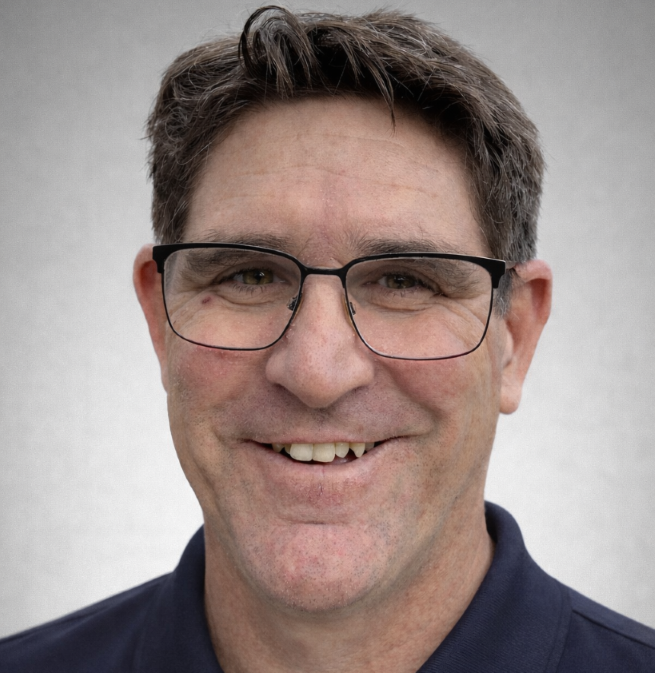
For Chris Slater, the most rewarding part of his job isn't a spreadsheet or a perfectly executed maintenance plan. It's a monthly meeting.
Once a month, Chris, Global Engineering Lead for one of ISS' largest global accounts, gathers chief engineers from sites across the country onto a single call. He'll bring a question he's been wrestling with, relay one from a regional director or ask the group how they've solved a problem that just popped up at another site. Then he listens.
"I tell them every month, and I'm not making it up, it's my favorite meeting that I do all month long," Chris says. "You get these really experienced people in the room. They chime in, they have a discussion, we go back and forth. I learn a lot from those meetings, and I think they come away having learned from each other too."
That instinct — the belief that the best ideas in technical services usually come from the people closest to the work — has shaped Chris' entire career.
Mechanical Engineering with a Long View
Chris earned a master's degree in mechanical engineering from California State University - Sacramento and has spent the last 13 years at ISS. He started on the energy side of the business before moving into his current global technical services and engineering role. Before ISS, he worked directly for the same client he supports today, giving him an unusually deep understanding of the customer's culture, history and expectations.
"Being in more of a tactical leadership role on the account is really a lot of fun," he says. "I get to interact with so many of the technicians, so many of the site leads and I have a view of the entire portfolio and how it operates."
That portfolio view is what makes his role distinct. When something breaks at a site in Brazil, Chris may have already seen the same problem play out in Amsterdam. When a regional team is troubleshooting a high-profile escalation, he can offer an outside perspective shaped by years of pattern recognition across continents.
Standardization Plus the Human Element
A significant part of Chris' work involves driving consistency across the global portfolio. He's pushing teams to use the same systems the same way, catalog assets the same way and hand off work between project and maintenance teams in a seamless flow.
But Chris is quick to point out that standardization only works when it's grounded in real-world feedback from the field. He recounts a recent push to roll out a mobile maintenance application to every site. Some regional leaders pushed back. The tool made sense for large, owned facilities, they said, but for small, leased sites where ISS wasn't doing direct maintenance, the value wasn't obvious.
"There's a feedback loop where you have to push, but also listen," Chris says. "Not everything is the same. A lot of it is just getting feedback from the teams that are actually doing the work."
What’s Changing in FM Engineering
When asked how engineering in facilities management has evolved, Chris doesn't hesitate. "The biggest thing I spend a lot of my time thinking about is smart building technology and analytics," he says. "The old way of doing maintenance, scheduled PMs and local data, the customer is just demanding more today. They want to know what brand of chiller breaks the least often. They want us to take all the data we have and give them meaningful insights."
Artificial intelligence is part of that conversation, and Chris sees real promise alongside open questions. "The question we're trying to solve as a team and as a company is what can it do, and what can't it do?" he says. "Where does AI fit, and where do we still need old school hard data analytics? It doesn't solve every problem, but it makes problems very different to solve."
What do people miss about the value engineering teams bring to a client partnership? Chris’ answer transcends the technical. "It's all relationships and it's all personal," he says. "We're still a service company. We fulfill a technical role, but the only way we're good is if we have good relationships with the people who are our clients."
It's the same reason his advice to anyone starting out in FM engineering comes back to people, not systems. "Spend as much time with the people at the site as you possibly can. Engineers too often get removed from things, get above things. The most important things to realize are: you don't know that much and you have to be curious. You have to be humble."
Ready to Connect
Have questions? We have answers.
Relationships start with a conversation. We are excited to discuss your culinary and facility needs, our people's success for clients, our culture, how we inject hospitality into our services, your career ambitions and more.