No results found, please try a different search term.

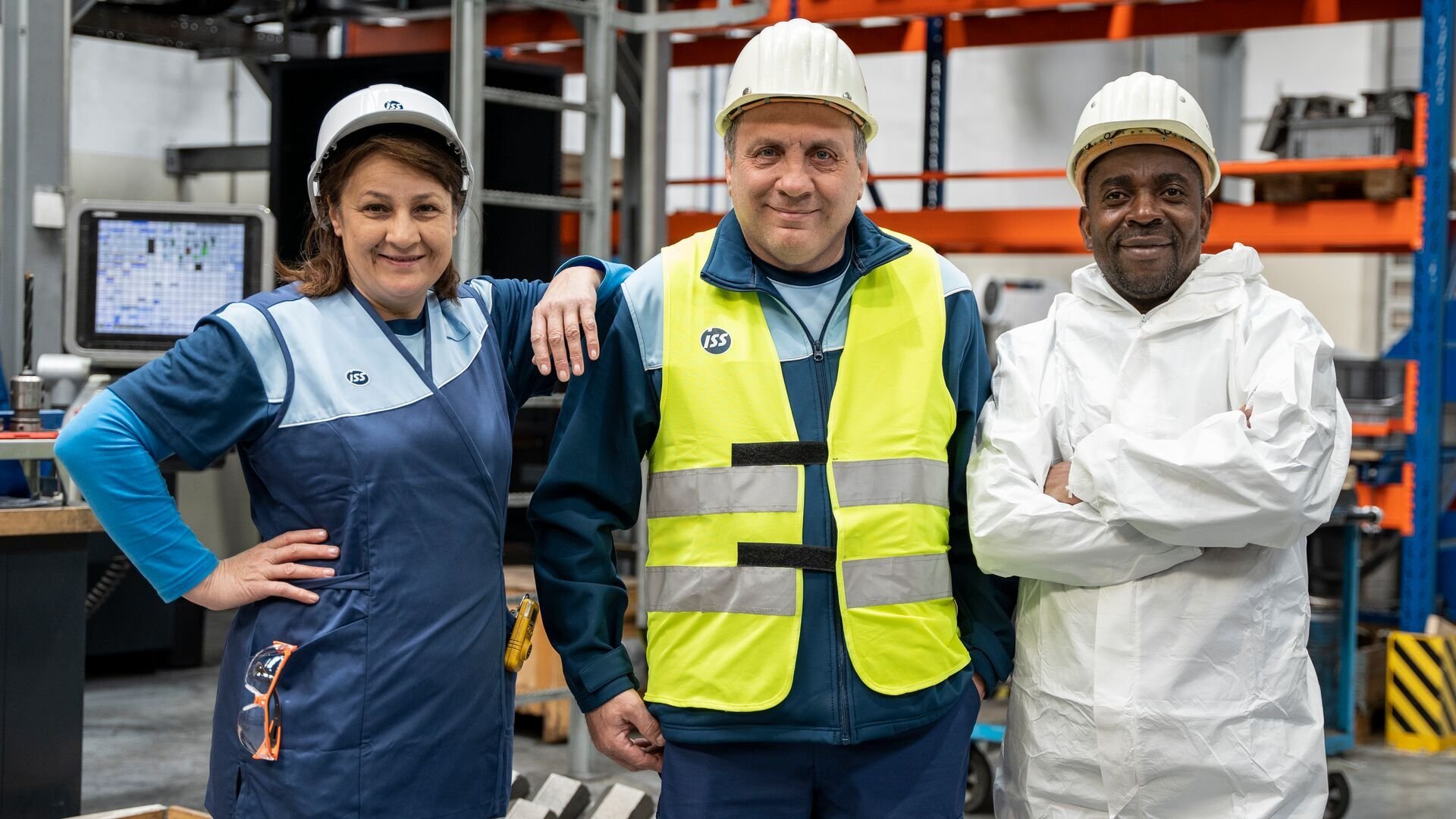
When most people hear "workplace safety," they think of physical safety like slip-and-fall prevention or regulatory compliance. While those are still vital, the way we define safety has evolved and broadened to help mitigate injuries that may not be visible.
When thinking about organizational safety, it’s important for leaders to create conditions for their people to show up as their authentic selves while also feeling both physically and psychologically safe at work.
Safety Is Our Collective Responsibility
For most of the facility services field’s history, physical safety has been the primary focus. Over time, our lens has widened to include socioeconomic factors and psychological safety. At present, these are aligned with physical safety in their significance for influencing individual well-being, especially after COVID ignited larger discussions around mental health at work.
Much of the conversation around psychological safety still focuses on what the individual can do: take breaks, sleep well, meditate, build a strong personal network. Those things matter, but from a workplace perspective, the real question isn't what one person can do for themselves. It's what employers are doing systematically to set their people up for success. That means asking hard questions, like:
- Do people feel like they have control over their work and their time?
- Are they consulted on decisions that affect them?
- Can they speak up when they see something wrong, and does someone close the loop if they do?
Like a physical injury, a mental wound can be profoundly harmful if left unaddressed; safety has to encompass the entirety of a person. We don't require employees to share a diagnosis before we set up systems to prevent physical injury, and we shouldn't approach mental health any differently.
Trust Is Safety’s Quiet Engine
A workplace can meet every physical standard and still leave employees feeling unsafe. A disengaged workforce can still put their collective heads down, follow the rules and get the job done. While this may meet the bare minimum of workplace safety, it doesn’t instill or build a culture of psychological safety.
Leadership sets the tone, but the individual frontline supervisor is often the vehicle for how safety becomes actionable. If a supervisor genuinely cares about their corner of the operation, their area of responsibility can become substantially safer, even as a broader workplace culture may struggle to hit the mark. If leadership signals that it’s acceptable to cut corners, people pick up on that.
Trust is the key to building psychological safety. Employees should know their leaders and colleagues have their backs. When undermining behavior goes unaddressed, workers stop being forthright about issues. When they speak up once and nothing changes, they tend not to speak up again.
The same is true of the language used by leadership. Workers can tell the difference between leaders who live their values and those who simply say what's expected of them; if we claim safety is a priority but it isn't one of our actual focus areas, people notice the discrepancy.
Any gap between what we say and what we do is where trust dies.
Where We’re Heading
Mental health isn't linear. Unlike a broken bone that heals on a predictable timeline, recovery from psychological injury can be less straightforward. Because of that unpredictability and uncertainty, mental health will continue to be a major part of how we define and approach workplace safety in the years ahead.
The impact of aligning physical and psychological safety is already appearing in new laws and regulations across the globe. For example, in Canada, Quebec has put psychosocial risk assessments into legislation, and other provinces are following their lead. In some jurisdictions, employees can even file workers' compensation claims for mental health under specific conditions.
Employers have a duty to consider the health and well-being of the whole person. Eventually, I expect we'll see similar frameworks begin to appear in parts of the United States.
The Bottom Line for Workplace Safety
What makes for a truly safe workplace? Creating an environment that considers whole-person health and well-being. That means cultivating systems that promote control, fairness and follow-through, along with leaders whose actions match their words.
And it means accepting that a person can't be physically safe without being mentally safe. Our job is to make sure our colleagues and clients never have to choose between the two.
Ready to Connect
Lora Galvin
Head of Health and Safety, North America