No results found, please try a different search term.
Think about the last time you stayed in an outstanding hotel. The way you were greeted at the door felt connected to the way you were checked in, which felt connected to the meal you had in the restaurant and the housekeeper who cleaned your room. Every touchpoint belonged to the same overall hospitality experience, leaving no aspect feeling like an afterthought.
Now think about the average workplace. The person fixing the HVAC, the team serving lunch, the colleague at the security desk and the attendant keeping the building clean rarely operate in the context of connected experiences. More often, they are measured and motivated in isolation.
Closing that gap is a massive opportunity I see across both facilities management and corporate food service, and it all begins with a simple mindset shift.
Closing Tickets and Creating Moments
Traditionally, effective facilities management has been measured via service level agreements, ticket-close rates, HVAC return temperatures and spare parts inventory. Those metrics matter, but they describe aspects of a building and its operation, not the needs of the people inside it. In my experience, technical teams rarely talk about what is actually happening in the space — things like special, on-site events or the times of day when spikes in foot traffic require an uptick in service.
A great hotel approaches things in a fundamentally different way. Department heads start each morning with a meeting centered on guests, walking teams through any arriving VIPs, what events are planned and where special attention will be necessary; everyone leaves knowing what the day requires of them. This acts as an aspirational model for the hospitality-driven workplace, where the end user — the person who actually works, eats and spends time in the building — becomes the focal point for every interaction.
Thinking Like a Host
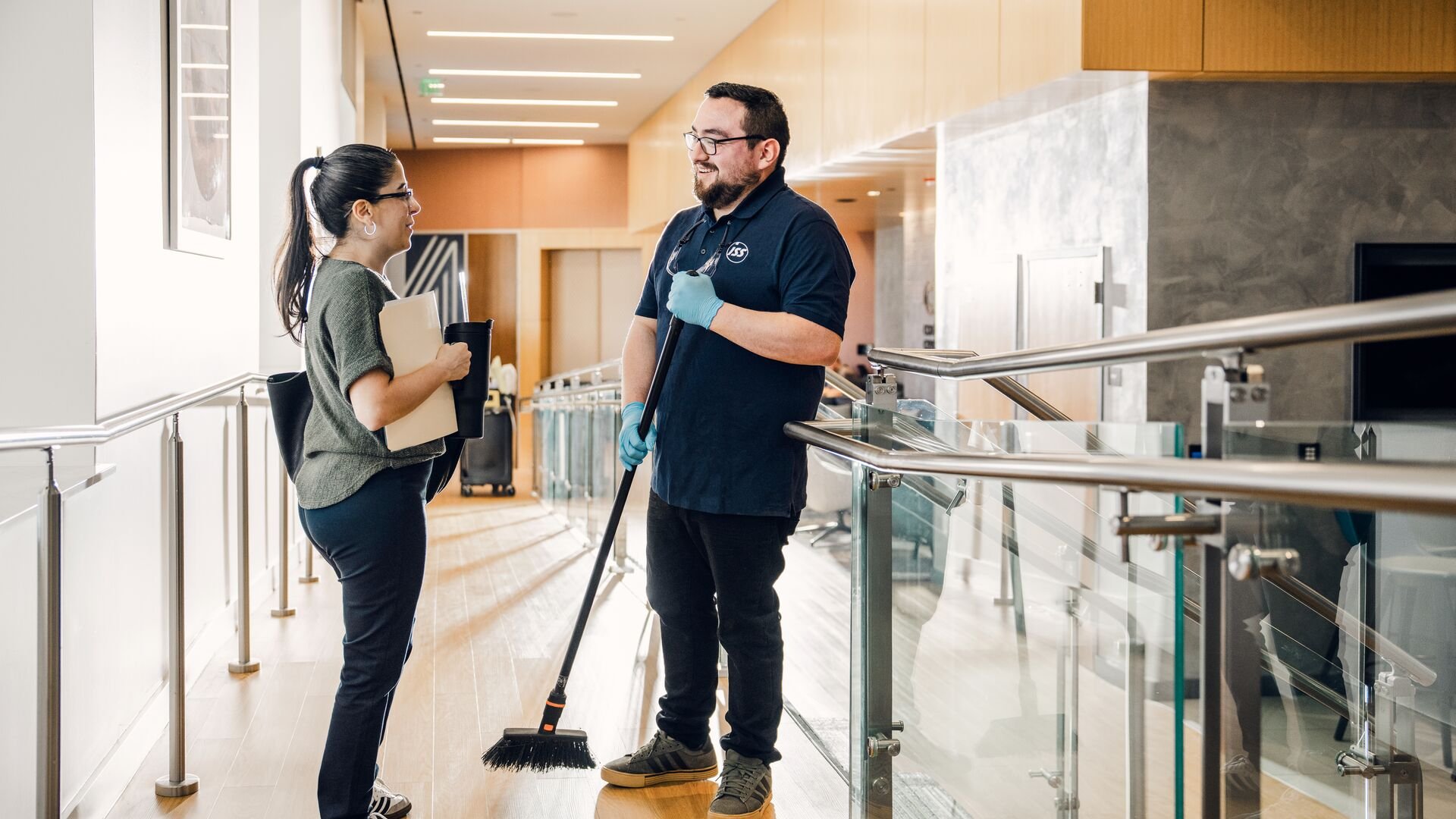
Shifting from a task-based to a hospitality-first approach to workplace facility management doesn’t happen by accident. It has to be built into every stage of the facility employee journey, from job description and recruitment to daily briefings and performance conversations. Our goal is to create awareness at every moment, so that whether someone is an engineer, an attendant, a security agent or a food service team member, the guest stays top of mind.
Teams should think in the context of how people experience their space and our service delivery. What does their feedback tell us?
When leaders, managers and supervisors make those considerations an expectation rather than the exception, the culture changes. That philosophy is taking shape in a new, internal effort built around creating moments that matter, designed to keep the end user at the heart of how we coach and develop our teams.
A Business Case for Hospitality
Hospitality can sound “soft” to some business leaders until they follow a chain of logic connecting it to the bottom line. The sequence begins by setting the right service and hospitality standards, then using quality assurance programs to make sure those standards are executed consistently. Strong execution correlates heavily with positive user experience, and a positive experience in the office contributes meaningfully to employee engagement. Engaged employees, by every standard measure, produce better business outcomes, whether that means stronger financial results, better customer service or smoother project delivery.
I’m careful not to overstate my case — workplace experience isn’t a magic pathway to employee engagement. Compensation matters, and the relationships an employee has with their manager and co-workers matter even more. But a positive, people-first experience at the office is a strong contributor, and that is where the return on investment becomes real for leadership. The same engagement that drives performance also improves retention and supports better mental health; these outcomes are all connected.
Food, Belonging and Feeling Seen
Belonging means something different to everyone, but I describe it simply: it’s the feeling that you are actually seen and understood. Food service is one of the most powerful ways we deliver that feeling. Clear allergen and dietary labeling allow people with specific health needs make confident choices. Menus shaped around the actual demographics and preferences of a campus signal that the people there are recognized, not generalized.
It also shows up in small, well-timed gestures. When an office is heads-down on a major deadline, a Friday happy hour or a barbecue can acknowledge the effort and give people a moment to breathe together. We try to understand the heartbeat of the office and let people know we’re hearing their feedback. That, to me, is what belonging looks like in practice.
I’m an enthusiastic supporter of using the right technology in the right places, and we put it to work across our operations wherever it makes service faster or more consistent. Self-service kiosks are a good example: we use them where they fit, such as quick ordering, while reserving a more human touch for the moments that call for it. But the work our teams do largely depends on relationships, on seeing the same people every day and being equipped to ask how their day is going.
The goal is to let technology handle what it does best so our people are freed up to do what only they can.
Preparing for the Future
Looking ahead, I see a future built on artificial intelligence and a near-constant interaction with technology, and we intend to be at the forefront of putting those tools to work for our clients. At the same time, the most forward-thinking facilities management and food service organizations will pair that technology with a renewed investment in human connection — because people will crave it more than ever. The companies that do both, embracing innovation while also keeping the human experience at the center, will be the ones positioned to lead.
Getting there requires a conversation facility management is not yet having. Many organizations are not yet training their teams to read the room: to understand what people are feeling and going through, and to connect with them on that level.
That, in my view, is our next frontier. In a world growing more automated by the day, the companies that understand the psychology of hospitality, that genuinely see the people they serve, will be the ones keeping the workplace notably human.
Ready to Connect
Rene van Camp
Chief Hospitality Officer, ISS, Principal, Guckenheimer